Exploring Mediums: Crayons
- cujeart
- Nov 18, 2025
- 2 min read
Updated: Dec 5, 2025
Most of us have fond memories of drawing with crayons in the home or classroom. The nostalgic medium is still around for a reason! Let's explore crayons for use in today's classrooms.

Crayons are pigmented sticks of wax, oil, or chalk, used for drawing and coloring. There are various types including traditional wax, oil, and water-soluble crayons. Crayons allow for diverse techniques like layering, smudging, and blending. Artworks created with crayons are characterized by rich textures, bold lines, and playful, colorful imagery.
Crayon Brands and Prices
Crayola Crayons Bundle - Available on Amazon for $7.85

Pros
Safe and non-toxic
Easy to use and low-maintenance
Affordable and durable for classroom use
Cons
More expensive than other brands
Wax limitations for mixed-media or layering
Cra-Z-Art 24ct Crayons Pack - Available on Amazon for $0.86

Pros
Certified non-toxic/school-quality
Affordable and accessible
Basic and reliable for general coloring
Cons
Durability/packaging issues
Limitations in quality compared to “artist-grade” crayons
Less versatility for mixed-media or advanced uses
Washable Jumbo Crayons, 4 Pack - Available on Amazon for $9.99

Pros
Budget-friendly/easy to supply many students
Sold in bulk (ideal for stocking up a classroom)
Good for basic coloring and early skill-building
Cons
Uncertain quality control and durability
Limited artistic versatility
Potential safety or ingredient uncertainty
Surface Types and Prices
Amazon Basics Multipurpose Copy Printer Paper - Available on Amazon for $6.65

Pros
Readily available and inexpensive
Smooth surface works for simple coloring
Good for quick exercises or planning
Cons
Too lightweight, poor crayon grip & poor layering
Tears or wrinkles under pressure
Not good for mixed-media or heavier media
BEIBOON 100 Sheets of Drawing Paper - Available on Amazon for $6.99

Pros
Works for basic drawing
Affordable
Cons
Very thin and flimsy
Not sturdy for paint or heavy crayon pressure
Canson XL Series Mixed Media Pad (Rough Texture) - Available on Amazon for $9.99 (REG. price $14.99)

Pros
Thick paper supports heavy crayon pressure
Good for mixed skill levels
Durable for repeated handling
Wire binding allows easy page flipping
Great value for the price
Cons
Crayon buildup
Not designed specifically for wax media
More expensive than basic classroom paper
Medium Exploration








Techniques and Uses
Techniques
Basic coloring
Layering
Blending
Uses
Fine motor skill development
Early drawing and color exploration
Visual journaling and sketchbooks
Seasonal and thematic art projects
Additional Techniques
Crayon + Watercolor: resist
Crayon + Tempera or Acrylic Paint
Crayon + Collage
Crayon + Scratch Art: sgraffito
Crayon + Texture Rubbings: fabric, leaves, sandpaper, etc.
Crayon + Ink Wash
Activity Exploration
Reflection
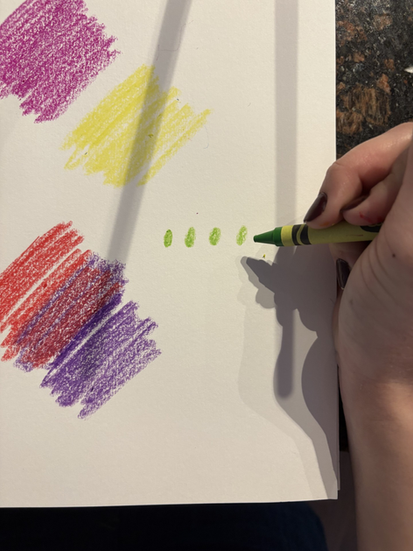
Crayons are invaluable to an art classroom, especially when working with younger kids. They're cheap and versatile. Thicker paper held crayon better and prevented tearing, while thin paper limited layering and pressure. Some crayons produced brighter color and smoother blending than others. This helped me see how choosing the right materials can improve both student confidence and the quality of classroom artwork.


Comments