Exploring Mediums: Charcoal
- cujeart
- Oct 1, 2025
- 3 min read
Updated: Oct 9, 2025
Charcoal is one of the oldest art mediums! In fact, it's over 30,000 years old and was frequently used in prehistoric cave drawings. Let's explore charcoal for use in today's classrooms!

Charcoal is a drawing medium made from burnt wood. It's known for its versatility in creating rich blacks, subtle grays, and varied textures. It comes in stick and pencil forms. It's dynamic range makes it ideal for exploring light, shadow, and form. The medium is easily blended, smudged, and erased, making it a challenge to make permanent. Because of this, fixatives are often used to preserve charcoal drawings.
Charcoal Types, Brands, and Prices
Willow and Vine
Vine and willow charcoal are natural drawing tools made from carbonized twigs without binders, creating soft black marks and gradations. Willow charcoal, from willow branches, is darker and softer, while vine charcoal, from grape vines, offers a grayer tone. Both are fragile, easily erased for corrections and blending, ideal for preliminary sketching, value manipulation, and dynamic contrasts, with vine charcoal being less brittle.


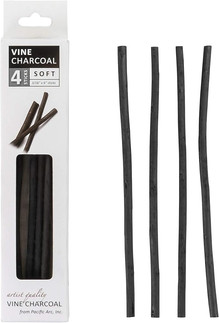
Winsor & Newton - available on Amazon for $13.89
PandaFly - available on Amazon for $7.99
Pacific Arc - available on Amazon for $5.40
Compressed
Available in varying degrees of hardness (soft, medium, and hard), the sticks can be broken for broad strokes or sanded to a point for detail work. They're easily blended and have a velvety, rich texture.


PandaFly - available on Amazon for $7.95
General's - available on Amazon for $7.73
Aenir - available on Amazon for $9.99
Charcoal Pencils
Charcoal pencils are wooden-cased tools with compressed charcoal, offering a cleaner, more controlled alternative to loose sticks for rich blacks and tonal values. Available in various hardness levels, they enable fine details or bold tones and can be blended, erased, and sharpened. The wood casing reduces breakage and enhances precision.


General's - available on Amazon for $8.12
MarkArt - available on Amazon for $5.59
Brusarth - available on Amazon for $4.99
Surface Types and Prices
For charcoal drawing, choose thick, textured paper or specialized charcoal and pastel papers. These are usually available in toned or colored pads for contrast. Avoid smooth papers, as charcoal won't adhere well, and overly rough papers, which can create a grainy finish. Opt for heavyweight, acid-free paper for durability.


Strathmore 300 Series Charcoal Paper Pad - available on amazon for $7.95
Canson XL Series Mixed Media Pad - available on Amazon for $12.46
Fuxi Sketchbook - available on Amazon for $9.98
Medium Exploration
In this section, I will be exploring the different forms of charcoal. I'll be evaluated each form's strengths and weaknesses for the classroom.
Vine or Willow Charcoal
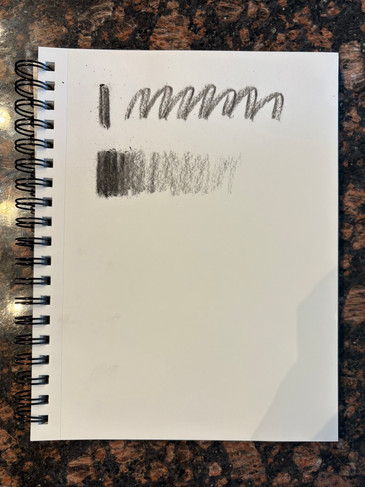
I will be using the brand Windsor and Newton to explore Vine charcoal on the Canson mixed media sketchbook paper.



Compressed Charcoal
I will be using the brand General's to explore compressed charcoal on the Canson mixed media sketchbook paper.


Charcoal Pencils
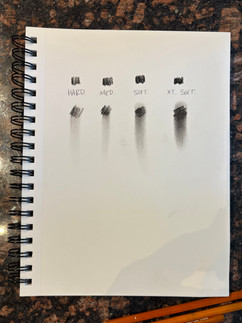
I will be using the brand General's to explore charcoal pencils on the Canson mixed media sketchbook paper.





Other Materials
I used a spray fixative to ensure the charcoals would not smear. This particular brand is Grumbacher's matte workable fixative. It does not seem to be available for purchase anymore, but Krylon's Workable Fixative is available on Amazon for $9.39.

Before using, ensure no students or children are around as the fumes are hazardous. In a well-ventilated classroom, lightly sprayed a thin layer of fixative and allow it to dry. This will prevent your charcoal drawings from smudging.
Activity Exploration
Reflection
I was a little overwhelmed by my first studio exploration. I don't believe I completed the exploration to the best of my ability due to material and time restraints. For the next one, I would like to take better advantage of the Art and Design Buildings resources for materials. A big reason why this exploration is so rudimentary is because I didn't purchase multiple types of charcoal or paper. At the time, it didn't feel feasible to buy so many materials. For the next exploration, I'd like to check out the Think Tank for materials. I will also purchase materials slowly over the course of a couple weeks in order to fully explore my chosen medium.
I learned a lot about the process of these studio exploration assignments, and feel better prepared for the next one.


Comments